
Child Has Fever? When Should You See a Pediatrician in Patna?

A fever in a child can make parents worried, especially when the temperature rises suddenly or is accompanied by cough, weakness, vomiting, poor appetite, or unusual sleepiness. While fever is commonly the body’s response to an infection, parents should pay attention to the child’s age, temperature, behavior, hydration, and other symptoms rather than focusing only on the number shown on the thermometer. A temperature of around 100.4°F (38°C) or higher is generally considered a fever in children.
For parents searching for the best pediatrician in Patna, understanding when professional medical attention is required can help them make timely decisions. Udayan Hospital in Patna provides healthcare services with a patient-focused approach and has 24×7 emergency services. The hospital is located on West Boring Canal Road, near Rajapur Pul, Patna.
Is Fever in Children Always a Reason to Worry?
Fever itself is not necessarily dangerous. It is often a sign that the immune system is responding to an infection. Children with mild fever may remain active, drink fluids, interact normally, and improve as the underlying illness settles. However, the overall condition of the child is important. A child who appears unusually weak, sleepy, confused, dehydrated, or has breathing difficulty may require prompt medical evaluation.
Parents should monitor how the child behaves between episodes of fever. If the child becomes more comfortable, drinks fluids, and returns to normal activity after the fever decreases, that can be reassuring. On the other hand, worsening symptoms, persistent fever, or new symptoms should prompt consultation with a pediatrician.
When Should You See a Pediatrician for Your Child’s Fever?
Parents should consider consulting a pediatrician when fever continues, repeatedly returns, or is accompanied by symptoms that are concerning. Children under three months require particular attention because a temperature of 100.4°F (38°C) or higher warrants immediate medical evaluation.
For older children, a pediatric consultation may be appropriate when fever lasts several days, the child continues to appear unwell after the temperature comes down, or symptoms such as ear pain, persistent cough, sore throat, vomiting, diarrhea, rash, or painful urination develop. The American Academy of Pediatrics advises contacting a doctor when fever persists for more than 24 hours in children younger than two years or more than 72 hours in children aged two years or older.
Fever Warning Signs Parents Should Never Ignore
Some symptoms accompanying fever require urgent medical attention. Difficulty breathing, severe drowsiness, inability to wake the child normally, seizures, stiff neck, unexplained rash, repeated vomiting, or significant dehydration can be warning signs of a more serious illness.
Repeated temperatures above 104°F (40°C) also require medical attention. Parents should not rely only on the temperature reading; a child’s appearance and behavior are equally important when deciding whether medical evaluation is needed.
Fever in Babies Requires Extra Attention
Babies, particularly very young infants, need careful monitoring when they develop a fever. A baby younger than three months with a temperature of 100.4°F (38°C) or higher should be evaluated promptly by a healthcare professional, even if the baby otherwise appears well.
Parents should also watch for poor feeding, fewer wet diapers, unusual sleepiness, persistent crying, breathing difficulties, or changes in responsiveness. These symptoms can indicate that the baby needs medical assessment rather than continued observation at home.
What Parents Can Do While Monitoring a Fever?
Parents can use a digital thermometer to measure their child’s temperature rather than relying only on touch. Keeping the child comfortably dressed and encouraging appropriate fluid intake can help support hydration. The appropriate use and dose of fever-reducing medication should be discussed with a healthcare professional, particularly for young children.
Parents should avoid giving medicines randomly or combining products without checking their ingredients and recommended doses. If the child has an underlying medical condition or takes regular medicines, professional advice becomes particularly important.
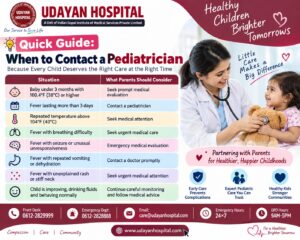
Quick Guide: When to Contact a Pediatrician
| Situation | What Parents Should Consider |
| Baby under 3 months with 100.4°F (38°C) or higher | Seek prompt medical evaluation |
| Fever lasting more than 3 days | Contact a pediatrician |
| Repeated temperature above 104°F (40°C) | Seek medical attention |
| Fever with breathing difficulty | Seek urgent medical care |
| Fever with seizure or unusual unresponsiveness | Emergency medical evaluation |
| Fever with repeated vomiting or dehydration | Contact a doctor promptly |
| Fever with unexplained rash or stiff neck | Seek urgent medical attention |
| Child is improving, drinking fluids and behaving normally | Continue careful monitoring and follow medical advice |
The exact course of action can vary according to the child’s age, symptoms, medical history, and examination findings.
Why Choosing the Right Hospital in Patna Matters?
When a child becomes unwell, parents need access to appropriate medical evaluation and emergency support when necessary. Choosing a Best Hospital in Patna can involve looking at factors such as emergency availability, experienced medical professionals, diagnostic support, patient-focused care, and the ability to manage different healthcare needs.
Udayan Hospital describes itself as a multi-super-specialty healthcare institute with multidisciplinary medical services, patient-centered care, and 24×7 emergency services. Its website states that the hospital has 50+ doctors, 20+ specialties, and 14+ years of experience.
Why Parents Should Not Ignore Persistent Fever?
A fever that does not improve or repeatedly returns deserves attention, particularly when the child’s general condition is worsening. Fever can occur with many different infections and illnesses, and symptoms may sometimes change over time. A pediatrician can assess the child’s symptoms, medical history, hydration, physical condition, and other relevant factors before recommending the next step.
For parents looking for the best pediatrician in Patna, the priority should be finding appropriate pediatric medical guidance when the child’s symptoms require professional assessment rather than relying solely on home remedies or online information.
When Is Emergency Care Necessary?
Emergency medical care should be considered when a child with fever has severe breathing difficulty, cannot be awakened normally, has a seizure, develops a stiff neck, becomes confused or unusually unresponsive, or develops a sudden purple or blood-colored rash. Significant dehydration or inability to keep fluids down can also require urgent assessment.
Udayan Hospital lists its emergency department as available 24×7. Parents can contact the hospital’s emergency department at 0612-2828888 when urgent medical assistance is required.
Get the Right Medical Attention for Your Child
A child’s fever may be temporary and associated with a common infection, but parents should know when symptoms require professional attention. Monitoring temperature accurately, keeping the child hydrated, observing behavior, and recognizing warning signs can help parents respond appropriately.
If your child has persistent or concerning fever symptoms, consulting a qualified pediatrician can help identify the possible cause and determine appropriate care. For families seeking pediatric healthcare and emergency support in Patna, Udayan Hospital provides multidisciplinary healthcare services and 24×7 emergency services.
Frequently Asked Questions About Fever in Children
What temperature is considered a fever in a child?
A temperature of 100.4°F (38°C) or higher is generally considered a fever in children, although the appropriate interpretation can depend on the child’s age and the method used to measure temperature.
When should I take my baby to a pediatrician for fever?
A baby younger than three months with a temperature of 100.4°F (38°C) or higher should receive prompt medical evaluation, even if the baby does not appear seriously ill.
How long can a child’s fever last before seeing a doctor?
For children aged two years or older, fever lasting more than three days should prompt contact with a doctor. For children younger than two years, persistent fever for more than 24 hours is a reason to contact the child’s doctor.
What are serious symptoms along with fever?
Breathing difficulty, severe drowsiness, seizures, stiff neck, unexplained rash, repeated vomiting, significant dehydration, or unusual unresponsiveness are warning signs requiring prompt medical attention.
Should parents treat only the temperature?
Not necessarily. The child’s overall condition, behavior, hydration, age, and accompanying symptoms are important when evaluating fever. A child who remains alert and drinks fluids may be less concerning than a child with a lower fever who appears extremely unwell.